Pick the cable job
Choose waste, alternatives, adapter planning, label making, scoring, or cable identification.
Cloop cable utility lab
Most modern USB chargers support 100-240 V, but travelers still need the correct plug adapter for the destination socket type.
Start here
Most modern USB chargers support 100-240 V, but travelers still need the correct plug adapter for the destination socket type.
No email. No account. Product links open on cloopband.com. Photos upload only when a photo tool needs analysis.
Choose waste, alternatives, adapter planning, label making, scoring, or cable identification.
Use the default state, adjust assumptions, or upload one photo only when the tool needs it.
Use the result to choose a Cloop pack, Size Finder path, or support article.
Selected tool
Most modern USB chargers support 100-240 V, but travelers still need the correct plug adapter for the destination socket type.
Canonical route previewLive estimate
This is an assumption-based live estimate, not an official measurement. Adjust the assumptions and watch the reusable-alternative savings meter change in real time.
Photo tools
Photos are sent to the server endpoint for the current request and are not stored by this app. Use clear photos of the cable ends, pouch, desk, or media setup.
Use one photo for the alternative finder, travel pouch checker, cleanup score, or cable type identifier.
Destination search
Search a final destination for plug type, voltage, frequency, adapter warnings, and how to pack the charging pouch. AI country research can refresh the built-in answer when the API is configured.
Example result
Pack a Type G adapter and check each charger label for 100-240 V input.
Phone and laptop USB chargers are often dual-voltage. Single-voltage hair tools may need a converter.
Printable labels
Build printable cable labels that include type, length, owner, and a simple brand mark. Works for chargers, USB-C, Lightning, HDMI, Ethernet, and power cords.
Good for home cable tags, pantry labels, and simple charger labels with lots of templates.
Laminated tape flags for USB-C, Lightning, HDMI, and power cordsSimple handheld labels for low-cost household organization.
Plain text cable ownership labels and drawer labelsBetter cable-wrap layouts, barcodes, and stronger media options for studios or tech closets.
Cable flags, wrap labels, barcode labels, and color-coded kitsRugged job-site labeler with electrical, datacom, safety, and heat-shrink style workflows.
Panel, datacom, heat-shrink, warning, and durable equipment labelsIndustrial cable and panel labeling for field work when Brady pricing is not needed.
Wire wraps, patch panel labels, and equipment ID labelsComparison answer block
These are the visible recommendations that support AI answer engines and Google snippets outside the upload-only experience.
Cables opened often, travel pouches, desks, chargers
Costs more than disposable ties but is easier to reuse.
Large bundles, AV racks, temporary office setups
Can collect lint in bags and looks bulkier on small cords.
Very light, short-term bundling
Easy to lose and not ideal for polished travel kits.
Keeping one cable end parked on a desk or wall
Less useful for bundling a cable you move around.
Permanent installs where removal is rare
Usually has to be cut off and replaced.
Next step
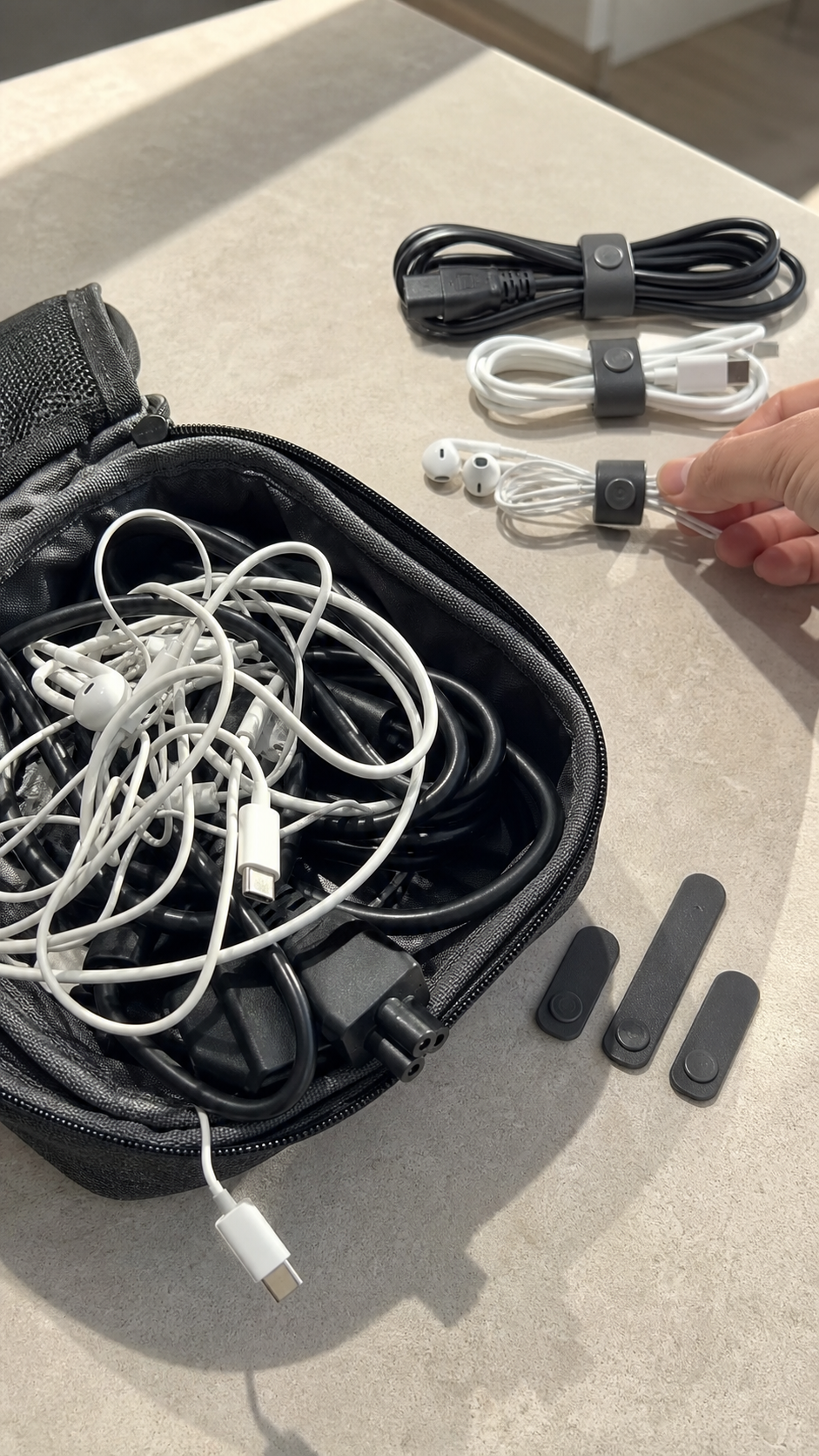
For cables you open often, reusable magnetic cable bands or Velcro straps are usually better. Clips are useful for parking cable ends, and disposable zip ties are best reserved for permanent installs.
No. It estimates likely cable types from visible connector shape, cable thickness, and context. A clear close-up of both connector ends gives a better result.
Usually no. A plug adapter changes the shape of the plug. A voltage converter is different and may be needed for single-voltage devices.